
Nvidia halts licensed Hopper chip shipments to China
Nvidia recorded $2.4 billion in licensed Hopper sales in its latest quarter, but its $130 billion fourth-quarter forecast assumes no data center computing revenue from China.
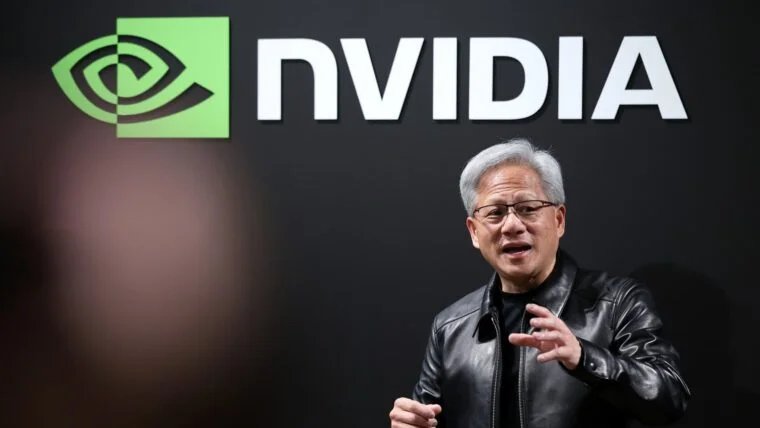
Nvidia stopped shipping licensed Hopper-generation artificial intelligence processors to China after recording $2.4 billion in sales in its latest quarter. Interim Chief Executive Officer Colette Kress disclosed the halt on the company’s November 17 earnings call, without explaining the decision or saying whether shipments could resume.
The halt removes a previously reopened export channel from Nvidia’s near-term revenue outlook. In January, the United States allowed exports of H200 processors to approved Chinese customers under specific security conditions, but Chinese import restrictions have complicated deliveries.
Nvidia reported $115.8 billion in revenue for its fiscal third quarter, ended October 25, up 103% year over year. Its fourth-quarter forecast is $130 billion, plus or minus 3%, and assumes no data center computing revenue from China.
China sales and Nvidia’s forecast
The $2.4 billion in licensed Hopper shipments amounted to about 2.1% of third-quarter revenue and 2.2% of Nvidia’s $107.6 billion in data center revenue. Nvidia has not disclosed how much more it might have earned if shipments had continued.
The company expects fourth-quarter revenue to exceed its third-quarter result by about 12.3%, supported by demand for its Blackwell and Vera Rubin computing platforms. FinanceFeeds reported that third-quarter revenue exceeded an analyst consensus of about $109.1 billion. Adjusted earnings were $2.68 per share, compared with expectations of $2.48.
Nvidia expects fourth-quarter gross margins of 71% to 72%, below the 74.9% non-GAAP margin reported in the third quarter.
Export approvals and import restrictions
The United States first restricted exports of advanced artificial intelligence processors to China in 2022 and later tightened controls on higher-performance computing technology. After negotiations between U.S. President Donald Trump and Chinese President Xi Jinping, Washington changed its licensing policy in January 2026. H200 export applications could then be reviewed individually instead of facing a presumption of denial.
The Bureau of Industry and Security said approvals would depend on security requirements, including safeguards against unauthorized access and assurances that exports would not divert advanced semiconductor manufacturing capacity from U.S. customers.
Washington later approved H200 exports to several major Chinese technology companies, including Alibaba, Tencent and ByteDance. Beijing has restricted large-scale imports while encouraging domestic alternatives. About 600,000 H200 chips were being held in Hong Kong earlier in November while awaiting Chinese import authorization, Reuters reported.
Nvidia’s statement does not establish whether Chinese import restrictions, commercial considerations or further compliance requirements led to the halt. A separate U.S. rule introduced on November 16 tightened controls on overseas data centers that provide remote access to advanced American artificial intelligence computing capacity. The rule addresses indirect access to restricted technology but does not establish why Nvidia stopped the licensed Hopper shipments.
Leadership and supply commitments
The announcement came less than a week after Nvidia co-founder Jensen Huang resigned as chief executive on November 12. Kress, the company’s longtime chief financial officer, is temporarily in charge. FinanceFeeds previously reported on Huang’s resignation and the succession process.
U.S. lawmakers have questioned the administration’s decision to permit H200 exports to China. Senator Ron Wyden and Representative Richard Neal asked Commerce Secretary Howard Lutnick for information about the licensing arrangements as part of wider scrutiny of Nvidia’s export compliance and distribution channels.
The halt does not establish that Nvidia violated export rules or that the leadership transition caused the decision. The company has not provided evidence linking the developments.
Nvidia’s third-quarter data center revenue grew 110% year over year. The company has increased supply commitments to $390 billion, largely to secure memory components for future products. Those commitments support production expansion and expose Nvidia to execution and demand risks if customers delay purchases or infrastructure deployment.
News is for information only and is not investment advice. Trading forex and CFDs carries a high risk of losing money.