
Tesla and SpaceX Shares Fall as Merger Questions Mount
Tesla and SpaceX fell on Wednesday as investors weighed a possible $3.5 trillion all-stock merger. An EU committee also postponed a meeting on Tesla driving technology.
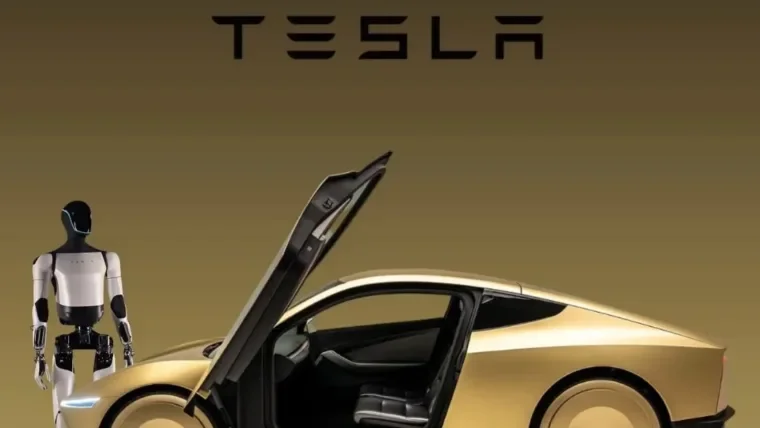
Tesla and SpaceX shares fell sharply on Wednesday, November 25, 2026, as investors questioned the terms of a possible merger between the two companies founded by Elon Musk. Tesla dropped nearly 6% in early trading and SpaceX fell about 8%, while the Nasdaq Composite lost around 4% in a broader technology sell-off.
The declines followed reports that the companies had appointed five directors and three investment banks to advance talks on a possible all-stock deal valued at about $3.5 trillion. Neither company has announced a final agreement, valuation terms or an exchange ratio.
Tesla also faced a separate setback after a European Union meeting expected to consider wider approval of its assisted-driving technology was postponed until December 15.
Independent special committees are evaluating a possible transaction, a process confirmed in the companies’ October 2026 filings with the Securities and Exchange Commission. Tesla directors Robyn Denholm, Kathleen Wilson-Thompson and Jack Hartung are involved in the talks, alongside SpaceX directors Roelof Botha and Randy Glein. Morgan Stanley and Goldman Sachs are advising SpaceX, while Evercore is working with Tesla.
The committees are considering an all-stock deal, with shareholder approvals and unresolved valuation questions among the obstacles. Gary Black, managing partner of The Future Fund, has warned that a deal giving Tesla shareholders a 25% premium could require SpaceX to issue about 52% more shares. Under that assumption, existing SpaceX shareholders would own about 65.8% of the enlarged share count, before other possible ownership changes.
The lower ownership percentage would not necessarily mean an equivalent drop in share value, since SpaceX would also acquire Tesla’s assets and earnings. The outcome would depend on the price paid, the value of Tesla’s business and any benefits from combining operations. For Tesla shareholders, a 25% takeover premium could disappear if the value of the SpaceX shares received later fell 20%, assuming a fixed exchange ratio.
JPMorgan analysts have identified possible S&P 500 eligibility as a potential benefit for SpaceX shareholders. The company completed its initial public offering in June 2026 and later joined the Nasdaq-100. S&P 500 inclusion has separate requirements for profitability, liquidity and public float, as well as a decision by the index committee.
A merger could change the combined company’s earnings profile, ownership structure and eligibility calculations, but would not guarantee S&P 500 admission. Funds tracking the index could buy shares if the company were included, though any such inflows depend on a completed deal and a later index decision.
The companies would also need to establish whether operational benefits justify a combination of Tesla’s automotive manufacturing, energy storage and robotics operations with SpaceX’s satellite communications, launch services and computing businesses.
The European Commission said a meeting of the Technical Committee for Motor Vehicles had been postponed from December 1 to December 15. The committee had been expected to consider, and potentially vote on, wider European approval for Tesla Assisted Driving, previously marketed as Full Self-Driving.
The system controls steering, acceleration and braking while requiring continuous driver supervision. It is not approval for fully autonomous driving without supervision. Tesla received preliminary approval in the Netherlands in April, and several other European countries have since permitted deployment.
Wider European Union approval requires support from at least 15 of the bloc’s 27 member states, representing 65% of its population. A negative decision at the EU level could invalidate existing national approvals. Wider availability could increase the market for Tesla’s paid driver-assistance features, but the company has not said how much additional European revenue approval might bring.
SpaceX’s latest quarterly filing says a combination would require approval from its special committee, board and controlling shareholder. Tesla has disclosed that its independent committee must recommend a deal before any required shareholder vote. Investors are watching for an exchange ratio, financial projections and evidence that benefits could offset integration costs and potential dilution.
Until the companies disclose transaction terms, the financial effects remain hypothetical. The share declines came amid a broader market sell-off and do not represent a measurable loss from an agreed acquisition.
News is for information only and is not investment advice. Trading forex and CFDs carries a high risk of losing money.