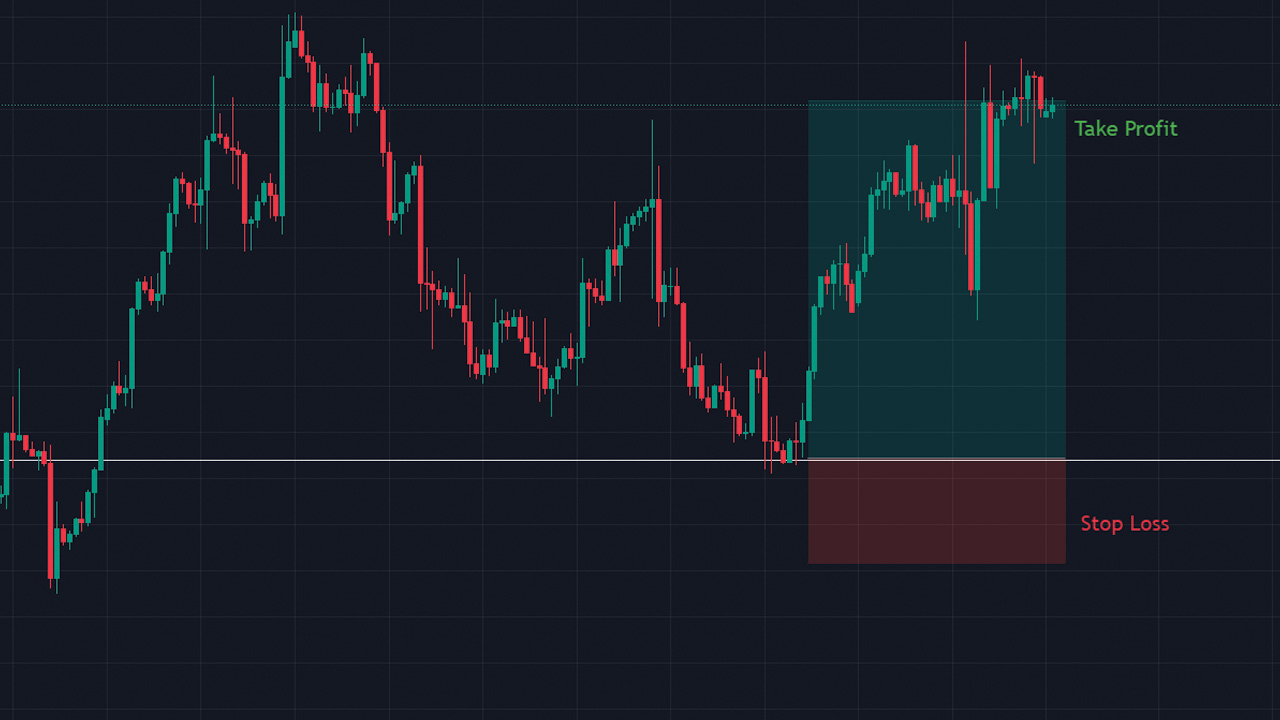
Learn how to set effective stop-loss and take-profit levels to minimize losses, lock in profits, and improve trading performance with these proven strategies.
Setting Stop-Loss and Take-Profit Levels Effectively
One of the most important aspects of successful trading is mastering the art of risk management. By setting appropriate stop-loss and take-profit levels, traders can protect their capital, minimize losses, and lock in gains. In this article, we will discuss how to set stop-loss and take-profit levels effectively, the strategies behind them, and how they can enhance your trading performance.
What Are Stop-Loss and Take-Profit Levels?
Understanding Stop-Loss Levels
A stop-loss order is a predefined level at which you automatically exit a trade if the market moves against you. Setting a stop-loss level helps you minimize losses by closing a position before the market declines too far. Without a stop-loss, a trader can experience significant losses, especially during times of market volatility.
For example, if you are long on a stock and the price begins to fall, your stop-loss order ensures that your position will be closed automatically once the price reaches a certain level, protecting your capital. This simple tool is essential for reducing risk in all forms of trading, including Forex trading, stocks, commodities, and cryptocurrencies.
Understanding Take-Profit Levels
A take-profit order is the counterpart to a stop-loss. It is a level set to automatically close a trade once the price reaches a specified target, securing your profits. A take-profit level is crucial because it allows traders to exit the market at the right time, capturing gains before the market reverses. By setting a take-profit, traders avoid the temptation to stay in a winning trade too long, only to see profits evaporate if the market changes direction.
Why Are Stop-Loss and Take-Profit Levels Important?
Both stop-loss and take-profit levels are essential tools for risk management. They provide a structured approach to controlling losses and locking in profits. Setting these levels enables traders to:
- Protect their trading capital from significant losses.
- Eliminate emotional trading decisions.
- Establish clear exit points to take advantage of profitable trades.
- Maintain discipline by following a pre-determined trading plan.
In volatile markets, having stop-loss and take-profit orders can help traders avoid panic-driven decisions that often lead to poor outcomes.
How to Set Effective Stop-Loss Levels
Setting effective stop-loss levels is essential for protecting your trading capital and managing risk. One common approach is to use support and resistance levels to determine where to place your stop-loss. For a long position, this would be slightly below the support level, and for a short position, just above resistance. Another strategy is the percentage-based stop-loss, where you risk a set percentage of your capital on each trade, helping to control potential losses. A volatility-based stop-loss considers market fluctuations, using indicators like the Average True Range (ATR). Additionally, stop-losses can be placed near moving averages, which align with overall market trends, providing dynamic protection.
1. Use Support and Resistance Levels
One of the most common methods to set an effective stop-loss level is by identifying support and resistance levels on a price chart. Support levels are price levels where an asset tends to stop falling and rebound, while resistance levels are points where the price struggles to rise. By placing your stop-loss just below the support level (for a long position) or above the resistance level (for a short position), you can limit your losses without being prematurely stopped out by minor price fluctuations.
For example, if a stock is trading at $50 and the support level is at $48, setting a stop-loss at $47.50 would protect you from a large decline while allowing the stock some room to move naturally.
2. Percentage-Based Stop-Loss
Another effective strategy for setting stop-loss levels is the percentage-based approach. With this method, traders determine the maximum percentage of their capital they are willing to risk on a single trade. For instance, if you're comfortable risking 2% of your capital on a trade and your account balance is $10,000, your stop-loss would be set at a level that limits your loss to $200.
Percentage-based stop-loss orders are particularly useful for managing risk across multiple trades and ensuring that no single trade results in significant capital depletion.
3. Volatility-Based Stop-Loss
Setting a stop-loss based on market volatility is another popular method. In this approach, traders analyze the volatility of the asset to determine how far the price might swing in a typical trading session. The more volatile an asset, the wider the stop-loss should be to prevent being stopped out by normal price fluctuations.
Technical indicators like the Average True Range (ATR) can help traders assess market volatility. For example, if the ATR of an asset is 2, a trader might set their stop-loss at 2.5 ATRs to give the trade room to move while still protecting against significant losses.
4. Moving Average Stop-Loss
Using moving averages as a guide for setting stop-loss levels is a common strategy among technical traders. A moving average is an indicator that smooths out price data over a specified period, showing the overall trend direction. Traders can place their stop-loss just below the moving average (in
Published by:
 Daniel Carter